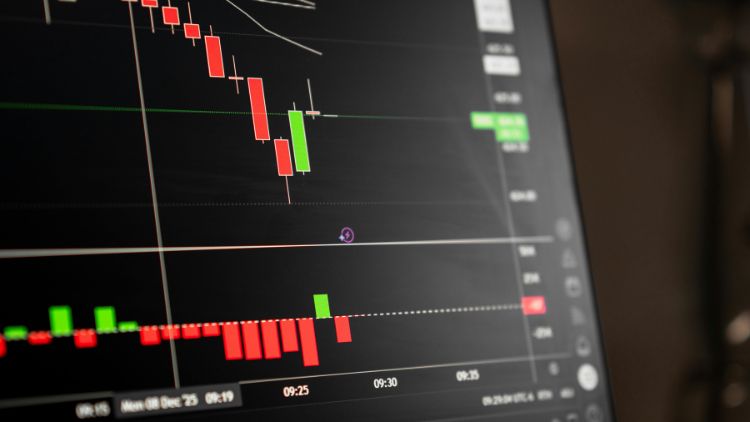
Beginner Best Seller Equity & NSE/BSE

Stock Market Foundation Program

Go from zero to your first confident trade in the Indian stock market — in just 8 weeks. No jargon, no assumptions, just practical skills you can use on Day 1.

★★★★★ 4.9 (312 ratings)
1,200+ students Enrollled
Last updated March 2026
Tamil & English
Lead Instructor: Vianmax Academy Lead Faculty
8 Weeks
40+ Video Lessons
Live Sessions Included
Certificate of Completion
Lifetime Recording Access
₹2,999 ₹4,999
🏷 40% OFF — Limited Time Enroll Now Book Free Demo Class
30-day money-back guarantee
This course includes
40+ hours of video content
Weekly live mentoring sessions
15+ downloadable workbooks
Real market case studies
Access on all devices
Certificate of Completion
WhatsApp support group

Course Overview

The Stock Market Foundation Program is Vianmax Academy's flagship beginner course, purpose-built for the Indian market. It takes you from the very basics — what a stock actually is — all the way to identifying trade setups on live NSE and BSE charts, managing your risk, and executing your first real trade with confidence. Every lesson is grounded in real Indian market examples: Nifty 50 stocks, intraday scenarios, and sector events you read about in the news every day.

Financial literacy is one of the most valuable skills a person can develop, yet most Indians have no formal access to it. Our course fills that gap. You don't need a finance degree, prior trading experience, or even a trading account to begin — we walk you through every setup step by step. Whether you're a salaried professional looking to grow your savings, a student exploring a career in finance, or someone who's simply curious about how markets work, this program gives you a rock-solid foundation.

What makes this course different is its emphasis on doing over just watching. Every module includes live chart analysis, guided paper trading exercises, and take-home assignments using real market data. By Week 5, you'll already be identifying and journaling trade setups. By graduation, you'll have built your own personalised watchlist, a structured trading plan, and the mental discipline to stick to it.

We maintain small batch sizes to ensure every student receives individual attention during live sessions. Our instructors are active market participants — they're not teaching from textbooks; they're teaching from the same charts they trade every day.

What You Will Learn

Understand how Indian equity markets work — NSE, BSE, SEBI, settlement cycles, and market participants
Read and interpret candlestick charts, identify support/resistance levels, and draw trend lines with confidence
Apply core technical indicators — RSI, MACD, EMA, Bollinger Bands — in real chart setups
Evaluate stocks using fundamental ratios (P/E, P/B, ROE, EPS) and read company financial statements
Implement a complete risk management framework — position sizing, stop-loss placement, and risk/reward ratios
Build a curated stock watchlist using screening tools and conduct sector-based analysis
Design a personal trading plan with entry rules, exit rules, and capital allocation guidelines
Trade (or paper-trade) your first real market setup and review it using a structured trade journal

Who This Course Is For

  • Students & Fresh Graduates — Build financial knowledge early and get ahead of the curve in understanding markets before entering the workforce.
  • Salaried Professionals — Learn how to invest and trade your savings intelligently in the Indian equity market alongside your career.
  • Complete Beginners — Anyone who's curious about stocks, has heard of Nifty and Sensex, but doesn't know where to begin.
  • Business Owners & Entrepreneurs — Understand how capital markets work, how to read company performance, and how to grow surplus capital.
  • Self-Taught Traders Who've Lost Money — If you've been trading without a plan, this course helps you restart with a structured, disciplined approach.
  • Finance Enthusiasts — Those who follow financial news and want to deeply understand market dynamics, not just consume headlines.

Prerequisites

No prior knowledge required. This course starts from absolute zero. You don't need a finance background, any prior trading experience, or even a demat account to begin. All you need is a smartphone or computer with an internet connection, a willingness to learn, and the discipline to practice what you're taught. We'll guide you through opening your trading account as part of the course itself.

  • Basic smartphone or laptop with internet access
  • Willingness to spend 3–4 hours per week learning and practising
  • A PAN card (for opening a demat account in Module 2)
  • No trading account, no prior knowledge, no finance background needed

Course Curriculum

8 Modules 40+ Lessons 8 Weeks 3–4 hrs/week 3 Capstone Projects
01
Introduction to Financial Markets
Week 1  ·  4 Lessons
4 lessons
  • 1.1  How the Stock Market Actually Works
    What a share is, how ownership works, why companies list on exchanges, and the role of NSE and BSE in India.
  • 1.2  Market Participants — Who Moves Prices?
    Understanding the roles of retail traders, FIIs, DIIs, HNIs, market makers, and SEBI as the regulator.
  • 1.3  Types of Financial Instruments
    Equity shares, ETFs, mutual funds, bonds, F&O — what they are and how they differ. Where to begin as a beginner.
  • 1.4  Market Sessions, Indices & Settlement
    Pre-open, regular session, and closing. How Nifty 50 and Sensex are calculated. T+1 settlement explained simply.
Key Takeaway: You'll have a complete mental map of the Indian financial ecosystem and understand how your money moves when you buy or sell a share.
02
Trading Account Setup & Order Types
Week 1–2  ·  4 Lessons
4 lessons
  • 2.1  Opening Your Demat & Trading Account
    Step-by-step walkthrough of opening an account with a discount broker (Zerodha, Upstox, Angel One). KYC, documents needed, and account activation.
  • 2.2  Order Types — Market, Limit, SL & SL-M
    Understanding every order type available on Indian platforms. When to use each, with live platform demonstrations on Kite and Upstox Pro.
  • 2.3  Trading Platform Walkthrough
    Navigating Kite by Zerodha and TradingView — placing orders, setting alerts, reading the order book, and managing your portfolio.
  • 2.4  Brokerage, Taxes & Hidden Charges
    STT, exchange transaction charges, GST, SEBI fees, and stamp duty — fully explained. How to calculate your true cost per trade.
Key Takeaway: You'll have a live trading account set up, understand every order type, and know the exact cost of each trade before you place it.
03
Technical Analysis Fundamentals
Week 2–3  ·  5 Lessons
5 lessons
  • 3.1  Candlestick Charts — Reading Price Action
    Open, high, low, close explained. Single candle psychology. Bullish and bearish candle patterns: Doji, Hammer, Shooting Star, Engulfing, and Marubozu.
  • 3.2  Support, Resistance & Trend Lines
    How to identify and draw key price levels on Nifty and individual stocks. Breakouts, breakdowns, and the concept of role reversal.
  • 3.3  Chart Patterns — Continuation & Reversal
    Head & Shoulders, Double Top/Bottom, Flags, Pennants, and Triangles. How to trade these patterns with clear entry and target zones.
  • 3.4  Moving Averages — Trend Following Made Simple
    SMA vs EMA, golden cross, death cross, and using MAs as dynamic support and resistance. Applying these on Nifty 50 daily charts.
  • 3.5  Multi-Timeframe Analysis
    How to align weekly, daily, and intraday charts for high-probability setups. The concept of trend within a trend.
Key Takeaway: You can read any stock chart fluently, identify the dominant trend, mark key levels, and recognise high-probability pattern setups.
04
Technical Indicators & Volume Analysis
Week 3–4  ·  5 Lessons
5 lessons
  • 4.1  RSI — Momentum & Overbought/Oversold Zones
    How RSI is calculated, reading divergences, and using RSI for entry confirmation rather than as a standalone signal.
  • 4.2  MACD — Trend & Momentum Combined
    MACD line, signal line, and histogram. Crossovers, zero-line rejections, and MACD divergence as an early warning signal.
  • 4.3  Bollinger Bands & Volatility Trading
    Band squeeze, band expansion, and the %B indicator. How to trade breakouts from tight consolidation zones using BB.
  • 4.4  Volume Analysis — The Market's Lie Detector
    Why price without volume is incomplete. Volume climax, accumulation, distribution, and using OBV (On-Balance Volume) to confirm price trends.
  • 4.5  Indicator Confluence — Building Your Toolbox
    How to combine 2–3 indicators for high-probability signals. Avoiding indicator overload and the paralysis that comes with it.
Key Takeaway: You can use a defined set of 2–3 indicators together to confirm trade setups, rather than relying on a single signal blindly.
05
Fundamental Analysis Basics
Week 4–5  ·  4 Lessons
4 lessons
  • 5.1  Reading a Company's Financial Statements
    Balance sheet, profit & loss, and cash flow statement — demystified with real company examples from NSE-listed stocks.
  • 5.2  Key Valuation Ratios — P/E, P/B, ROE & EPS
    What each ratio tells you, industry-relative interpretation, and how to quickly screen stocks using Screener.in and Tickertape.
  • 5.3  Sector Analysis & the Business Cycle
    How different sectors perform at different stages of India's economic cycle. Identifying sector rotation to ride sector-wide momentum.
  • 5.4  Combining Fundamentals with Technical Setups
    Using fundamentals to select quality stocks and technicals to time your entry. The "right stock, right time" framework.
Key Takeaway: You can independently evaluate whether a company is financially healthy and determine whether its stock is priced fairly — skills most traders completely lack.
06
Risk Management & Trading Psychology
Week 5–6  ·  5 Lessons
5 lessons
  • 6.1  Position Sizing — How Much to Buy
    The 1–2% rule, fixed-fraction position sizing, and calculating lot size based on stop-loss distance. Practical Excel calculator included.
  • 6.2  Stop-Loss Placement & Risk/Reward Ratios
    Where to place a stop-loss that the market won't prematurely trigger. Why a minimum 1:2 R/R ratio is non-negotiable for long-term survival.
  • 6.3  The Psychology of Winning & Losing
    Loss aversion, overconfidence, FOMO, and revenge trading. Understanding why most retail traders lose and how to programme different behaviours.
  • 6.4  Building Your Trade Journal
    Setting up a Google Sheets / Excel trade journal. What to record, how to review your trades weekly, and how journaling accelerates improvement.
  • 6.5  Drawdown Management & Capital Preservation
    How to manage a losing streak, set monthly loss limits, and take planned breaks — the habits of professional traders.
Key Takeaway: You'll have a complete risk management system in place — position sizing rules, stop-loss discipline, and a trade journal — before you put a single rupee at risk.
07
Building Your Watchlist & Trading Plan
Week 6–7  ·  4 Lessons
4 lessons
  • 7.1  Stock Screening — Finding the Right Stocks
    Using Screener.in, Tickertape, and TradingView screener to filter stocks by sector, fundamentals, and technical criteria. Building a 20-stock watchlist.
  • 7.2  Designing Your Personal Trading Plan
    Defining your trading style (swing vs positional), markets traded, setup criteria, entry/exit rules, and daily routine. Template provided.
  • 7.3  Paper Trading — 10 Real Market Setups
    Guided paper trading exercise across 2 weeks using live NSE market data. Document each trade using the journal template from Module 6.
  • 7.4  Reviewing Your Paper Trades
    Live group review session where students share their paper trades for feedback. Understanding what worked, what didn't, and why.
Key Takeaway: You'll have a ready-to-use watchlist of 15–20 quality stocks, a written trading plan, and 10 paper trades reviewed with instructor feedback.
08
Live Market Sessions & Graduation
Week 7–8  ·  4 Lessons
4 lessons
  • 8.1  Live Market Analysis Sessions (×2)
    Two instructor-led live sessions during market hours. Real-time trade identification, commentary, and Q&A. Recordings available post-session.
  • 8.2  Your First Real Trade — Planning & Execution
    Guided walkthrough of identifying, planning, sizing, and entering your first real trade. Full pre-trade checklist review with the group.
  • 8.3  Capstone Presentation — Your Trade Setup
    Each student presents one trade setup (chart, rationale, entry, stop-loss, target, sizing) to the group for final review and graduation sign-off.
  • 8.4  What's Next — Paths After Foundation
    Overview of the next steps: Advanced Technical Analysis, F&O Mastery, and Algorithmic Trading. How to continue developing independently.
Key Takeaway: You graduate with the experience of live market analysis, a reviewed first real trade, your capstone presentation completed, and a clear roadmap for what to learn next.
Included with this Course

Practice Live on AlphaSync

Every module in this course comes with a structured AlphaSync exercise. Your AlphaSync paper trading account activates the moment you Enroll — use ₹10 lakh in virtual capital on live NSE & BSE market data to practice exactly what you just learned. No risk, no broker account needed.

Module 1–2
Navigate the Dashboard

Open AlphaSync, add 5 stocks to your watchlist, and observe live price movements for 30 minutes.

Open AlphaSync
Module 3–4
Place Your First Paper Trade

Execute a market buy order on RELIANCE or TCS. Track your open position and then square off at end of day.

Open AlphaSync
Module 5–6
Read Charts on Live Data

Switch to the charting view. Identify support/resistance zones on Nifty 50 using the tools taught in class.

Open AlphaSync
Module 7–8
Week-Long Trading Challenge

Trade daily for one week. Submit your AlphaSync trade journal (P&L screenshot) as your Module 8 assignment.

Open AlphaSync

Course Format

This is a blended learning programme combining pre-recorded video modules with weekly live instructor sessions. You study at your own pace through the week and come together as a group on weekends for live analysis, Q&A, and guided practice.

Video Modules

40+ structured video lessons averaging 20–35 minutes each, accessible anytime with lifetime access to recordings.

Weekly Live Sessions

Weekend live sessions with the instructor — chart reviews, Q&A, and real-time market analysis. Recorded for replay.

Assignments & Quizzes

End-of-module quizzes and practical chart assignments to reinforce each topic before moving forward.

Live Market Practice

Structured paper trading exercises during Modules 7 & 8 using real-time market data on TradingView and Kite.

WhatsApp Support Group

Dedicated batch group for daily market discussions, doubt resolution, and peer-to-peer learning between sessions.

Capstone Presentation

Final project where you present a complete trade setup to the instructor and batch for feedback and graduation sign-off.

Key Projects & Assessments

1
Chart Analysis Portfolio — 10 Annotated Charts

Select 10 stocks from the Nifty 50 or Nifty Next 50. For each, annotate the daily chart with support/resistance levels, trend lines, key candlestick patterns, and at least two technical indicators. Write a 3–5 sentence interpretation of the current market structure for each stock. This project develops chart-reading fluency faster than any other single exercise.

2
Paper Trading Journal — 10 Live Market Setups

Over the course of two weeks in Modules 7–8, identify and paper-trade 10 setups using the course's entry/exit framework. Record each trade in the provided journal template: setup rationale, entry price, stop-loss, target, actual outcome, and lessons learned. Submit your completed journal for instructor review before graduation.

3
Capstone — Your Complete Trade Setup Presentation

In the final week, present one complete trade idea to your batch and instructor. Include: the stock selected and why (fundamentals + technicals), a fully annotated chart, entry/exit levels, position sizing calculation, risk/reward ratio, and your trade management plan. This is your graduation presentation and is required to receive your certificate.

Materials & Resources Included

15+ PDF workbooks & module notes
Position sizing Excel calculator
Pre-built trade journal template (Google Sheets)
Personal trading plan template (editable)
TradingView chart layout templates
Stock screener criteria checklists
Recommended reading list (free resources)
Session recordings (6-month access)
Pre-trade checklist (printable)
WhatsApp batch support group

Time Commitment

8
Weeks Duration
3–4
Hours per Week
40+
Total Video Hours

We recommend dedicating 3–4 hours per week to this course — approximately 30–40 minutes of video content per day on weekdays, and one 1.5–2 hour live session on weekends. This pace keeps momentum high without overwhelming you alongside a full-time job or studies.

The course is intentionally paced to give you time to practise between modules. You won't just watch — you'll be annotating charts, completing assignments, and paper trading between sessions. That active practice is where most of the learning happens.

Certificate of Completion

Vianmax Academy — Certificate of Completion

Students who complete all 8 modules, submit the trade journal, and successfully present their capstone project earn the Vianmax Academy Certificate of Completion — Stock Market Foundation Program. The certificate is issued digitally in PDF format with a unique verification code and is signed by the lead instructor. It is suitable for sharing on LinkedIn and with employers as evidence of structured financial markets education.

Instructor Information

Vianmax Academy Lead Faculty

Head of Curriculum — Equity & Technical Analysis
12+ years market experience
1,200+ students taught
4.9★ average rating
NSE/BSE certified

Our lead instructor is a full-time equity trader and certified market analyst with over 12 years of active trading experience on NSE and BSE. Having started with a retail account and no formal training — and having made every mistake a beginner can make — they built Vianmax Academy's Stock Market Foundation Program specifically to give beginners the structured foundation they never had. Teaching style is practical and India-focused: every chart used in class is a live Indian stock, every example is current, and every lesson answers the question "how do I apply this tomorrow morning?"

Frequently Asked Questions

I have zero knowledge about stocks. Is this really for me?

Absolutely. This course was designed from the ground up for complete beginners. We don't assume any prior knowledge — not even basic finance. Module 1 begins with "what is a stock?" and we build from there. If you can use a smartphone and have a PAN card, you have everything you need to start. The most common feedback we receive from graduates is: "I wish I had found this course years ago."

Do I need a trading account before joining the course?

No — we actually walk you through opening a demat and trading account as part of Module 2. You'll learn how to evaluate brokers, understand charges, and set up your account step by step. For the first 6 modules, all practice is done on paper (simulated trades) so there's no financial risk while you're still learning. You'll only be ready to place a real trade by Module 8, and even then, we guide you through it.

How much time do I need to put in each week?

We recommend 3–4 hours per week. This breaks down to roughly 30–40 minutes of video content per weekday, plus one weekend live session of 1.5–2 hours. The course is structured for working professionals and students — you don't need to watch the markets all day. If you fall behind in a week, the recorded sessions are always available and you can catch up before the next module begins.

Are the live sessions recorded? What if I miss one?

Yes — all live sessions are recorded and uploaded within 24 hours. You have access to these recordings for 6 months after the batch concludes. We understand that everyone has prior commitments, so missing a session occasionally isn't a problem. However, we do encourage attending live where possible, as the real-time Q&A and group energy adds significant value that recordings can't fully replicate.

Will this course make me a profitable trader immediately?

This course will give you a complete foundation — the knowledge, framework, tools, and discipline to trade correctly. However, consistent profitability comes from applying these skills over time with experience. We do not promise "guaranteed profits" and we never will — anyone who does is misleading you. What we do promise is that by the end of this program, you will trade with a structured plan, manage your risk properly, and avoid the costly beginner mistakes that wipe out most new traders' capital in the first year.

What support do I get after the course ends?

All graduates are added to the Vianmax Academy alumni WhatsApp group where instructors share daily market insights, study materials, and answer questions. You also get a 6-month extension on your batch group access. Graduates receive a 20% discount on any advanced course they Enroll in — including Advanced Technical Analysis, F&O Mastery, and Algorithmic Trading with Python.

Ready to start your market journey?

Join 1,200+ students who've built a real foundation in the Indian stock market with Vianmax Academy.

  30-day money-back guarantee  |  No questions asked

₹2,999 ₹4,999
🏷 40% OFF — Limited Time Enroll Now Book Free Demo Class
30-day money-back guarantee
This course includes
40+ hours of video content
Weekly live mentoring sessions
15+ downloadable workbooks
Real market case studies
Access on all devices
Certificate of Completion
WhatsApp support group
Alumni community access
Next Step After This Course
Advanced Technical Analysis
6 Weeks · ₹2,499
Indian F&O Mastery Program
8 Weeks · ₹4,499
₹4,999 ₹2,999
Enroll Now